The rule of thumb that won't go away
For decades, a lot of systems were sized with a shortcut: roughly one ton of cooling for every 400 to 600 square feet. It's quick, and nobody gets a call-back for a house that's too cold. But it ignores the things that actually decide how much heat gets into your home: insulation levels, air leakage, windows, duct location and which way the house faces.
The proper method is a load calculation (ACCA Manual J), which accounts for all of those. A well-insulated, well-sealed home can need a lot less capacity than the rule of thumb suggests.
Why bigger isn't better
An oversized system cools the air fast and shuts off before it has run long enough to pull moisture out of it. That's called short-cycling, and in Florida it shows up as:
- A house that hits the thermostat setting but still feels sticky or clammy
- Rooms that swing between too cold and stuffy
- Higher bills, because starting up is the least efficient part of every cycle
- More wear on the compressor from constant on and off

Where the attic comes in
A leaky, under-insulated attic adds a huge amount of heat to your home every afternoon, and with ducts and the air handler often sitting up there too, the system is fighting the hottest part of the house. Sizing the AC for that load locks the problem in for the next 15 years.
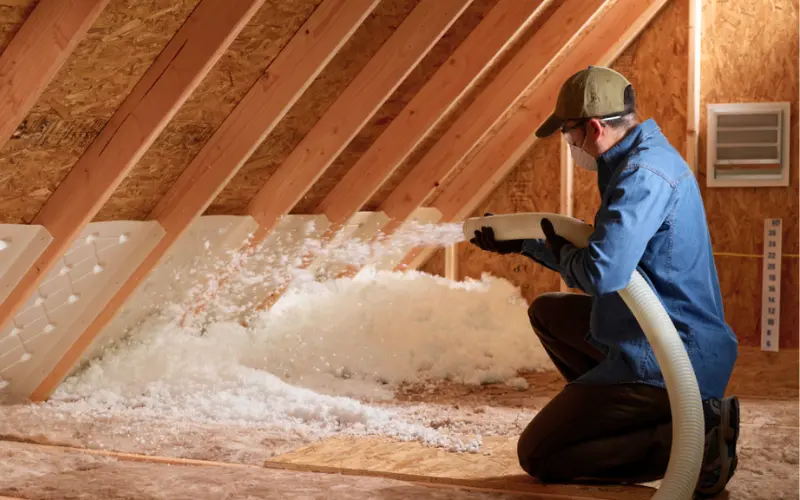
Fix the attic first (seal the ceiling, seal the duct joints, bring insulation up to the right depth) and the load drops. That can mean a smaller, cheaper and quieter replacement unit, or an existing unit that suddenly keeps up.
Before you replace your AC
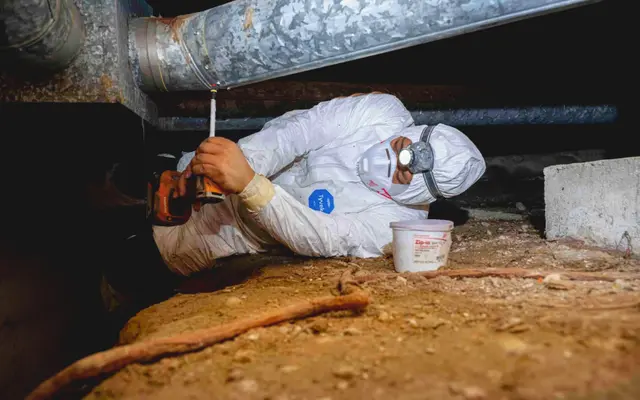
- Get the attic inspected. Look at insulation depth, condition and the obvious leaks.
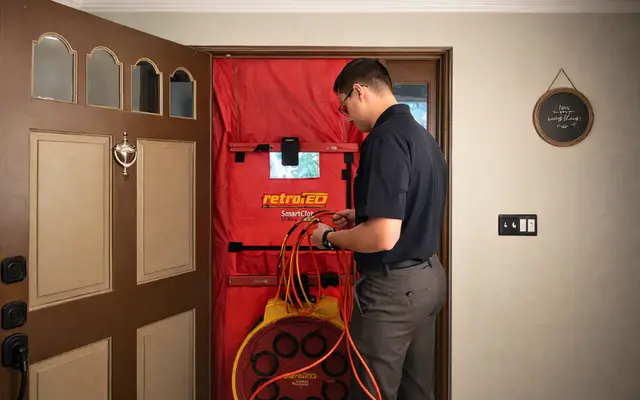
- Measure the house with a blower door so you know how leaky it really is.
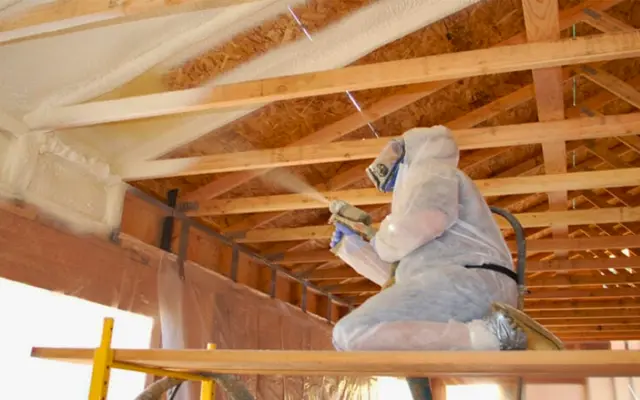
- Seal and insulate if the inspection says so.
- Then ask your HVAC contractor for a Manual J load calculation based on the improved house, not the old one.
We're not an HVAC company, so we don't sell units. That makes it easy for us to tell you honestly when the attic, not the AC, is the bottleneck.
Not sure what your attic needs?
Our free attic inspection includes photos of what we find and a clear, same-day price. No pressure, and you'll learn something either way.
Book a free attic inspection or call (727) 273-7826.
- ACCA Manual J, Residential Load Calculation
- U.S. Department of Energy, Energy Saver: Insulation
- ENERGY STAR: Duct Sealing